

5 Professional Lessons I'm Carrying into 2026
Reflections from the past year - lessons about stakeholder management, priorities, boundaries, and more.

As we kick off 2026, I’m struck by how much the landscape of data science leadership has shifted. The AI transformation we’ve been living through for the past three years has forced me to reckon with some uncomfortable truths about how I lead, learn, and sustain myself. Here are five lessons that have fundamentally changed how I approach my work, lessons I’m intentionally carrying into 2026.
👋 Hey! This is Manisha Arora from PrepVector. Welcome to the Tech Growth Series, a newsletter that aims to bridge the gap between academic knowledge and practical aspects of data science. My goal is to simplify complicated data concepts, share my perspectives on the latest trends, and share my learnings from building and leading data teams.
1. Truly Understanding Your Stakeholders Changes Everything
I used to approach stakeholder management reactively—responding to whoever pinged me, showing up to meetings I was invited to, and hoping I was building the right relationships. It felt haphazard, and honestly, I wasn’t sure if I was investing my time in the right places.
But after attending Satish Mummareddy’s Influence Without Authority course, I intentionally carved out time to truly understand what stakeholder management meant and how I wanted it to shape my career.
I sat down with my manager and we mapped out a deliberate stakeholder strategy. We identified who matters most for my current role and level, assessed their importance, and defined clear engagement approaches.
Here’s what that looked like:
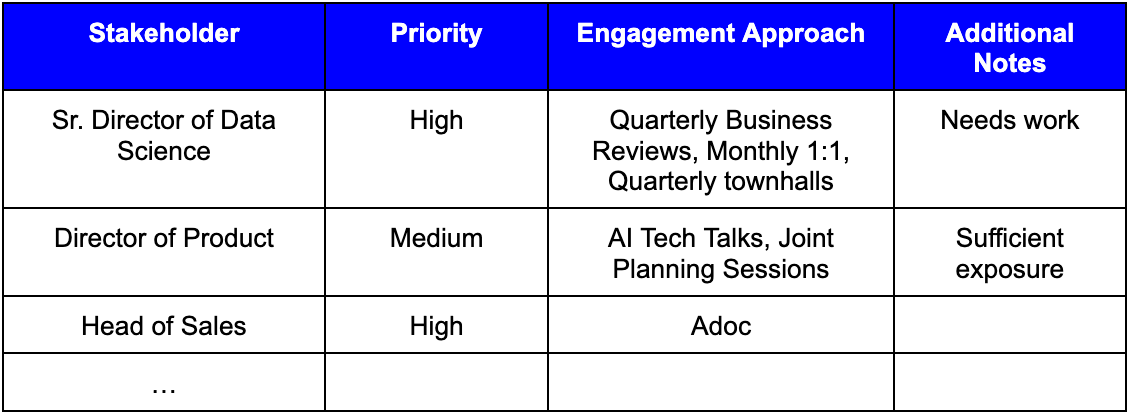
This simple exercise was revelatory. I discovered I was overindexing with Product but underindexing on Data Science leadership. I was also treating all Sales Directors equally when some were critical partners and others were peripheral. The clarity this brought was immediate.
More importantly, it shifted my mindset from “stakeholder management as a chore” to “stakeholder management as a strategy.” Each interaction became intentional. I stopped saying yes to every meeting and started protecting time for high-priority relationships. I built a deeper understanding of what kept my critical stakeholders up at night, which made my work more aligned and my proposals more compelling.
In 2026, I’m carrying this practice forward and treating it as a living document - reviewing it quarterly, adjusting priorities as contexts shift, and being ruthlessly honest about where my time creates the most value.
2. Ruthless Prioritization
2025 was relentless. From the first week of January to the third week of December, there wasn’t a single day when I had more hours than work. The requests kept coming - new projects to scope, stakeholders to align, team members to guide, key deliverables to ship. Add to that the strategic work: quarterly reviews, townhalls, hackathons to drive innovation. Some days, I realized I hadn’t caught my breath in weeks.
This pressure forced me to prioritize ruthlessly.
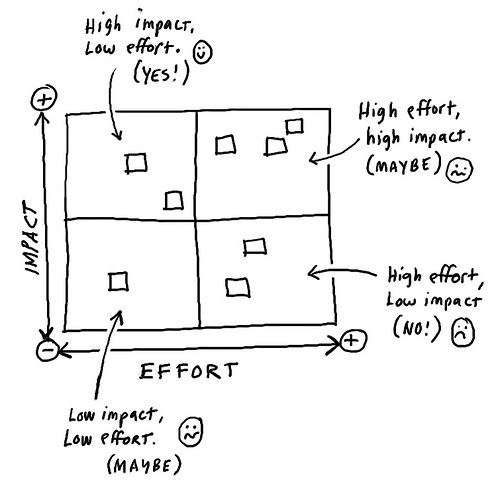
I had to get clear about what I would take on, what I would push back on, and what I would delegate. The hardest moments were when opportunities came along that felt like incredible learning experiences - like new technologies to explore, interesting collaborations, cutting-edge projects. My instinct was to say yes. But I’d learned the hard way that taking on too much doesn’t just hurt me; it hurts everyone counting on me. I don’t want to be the person who overcommits and lets things fall through the cracks. Trust lost that way is nearly impossible to repair.
So I developed a filter:
-Does this project advance me toward the next step in my career, or
-Does it fulfill a personal learning goal that’s critical right now?
-Is this a critical project that needs my deep expertise?
If the answer was no or even “maybe”, I had to let it go.
This meant saying no to interesting work. It meant disappointing people who wanted my involvement. It meant watching opportunities pass by that, in a different season, I would have jumped at.
But it also meant that the work I did commit to, I could do well. My team knew that when I said yes, I was all in. My stakeholders knew I wouldn’t drop balls. And I knew I was building toward something intentional rather than just reacting to whatever landed in my inbox.
Ruthless prioritization isn’t about doing less. It is about doing what matters. In 2026, I’m carrying this discipline forward, not as a temporary survival tactic, but as a permanent operating principle.
3. Self-Learning is No Longer Optional
I’ve always valued learning, but 2025 taught me that continuous self-learning needs to be treated like infrastructure, not a hobby. With AI tools proliferating and methodologies shifting every quarter, waiting for formal training or conference season means you’re already behind.
What changed for me was recognizing that self-learning isn’t just about staying relevant (though it does that). It’s about maintaining agency. I blocked out Friday afternoons for deliberate learning time like reading papers, experimenting with new tools, or reading through open-source implementations.
Some weeks I protect that time fiercely; other weeks it gets sacrificed. But the weeks I skip it, I feel the gap widening between where the field is going and where I am. When you understand the emerging tools and techniques, you can shape how they’re applied rather than just implementing what vendors or consultants recommend. In a landscape where AI is reshaping data science itself, that agency is everything.
4. Prioritize Yourself
I was raised in a culture that rewards hard work. And for the most part, that’s been a gift. It has shaped my work ethic, my resilience, and my ability to push through challenges. But it becomes problematic when that hard work takes over your life. And that’s exactly what I was doing.
Juggling between PrepVector and my full-time job, I de-prioritized everything that actually mattered: my health, my wellbeing, my joy. I was prioritizing others’ happiness over my own, saying yes when I meant no, and absorbing responsibilities that weren’t mine to carry. It left me hurt and broken in ways I didn’t fully recognize until I was already deep in it.
So I made a decision: to value those who value me, and to put myself at the center of my own life. I cannot pour from an empty cup, and filling my own cup first isn’t selfish. It is the foundation for everything else.
Candidly, it’s a journey I’m still walking, and it has been extraordinarily hard. The guilt of taking a day off, the voice that says “but what if something falls apart without me,” the discomfort of disappointing someone - these don’t just disappear because you’ve decided to change. But I’m learning, and I’m being more intentional about it.
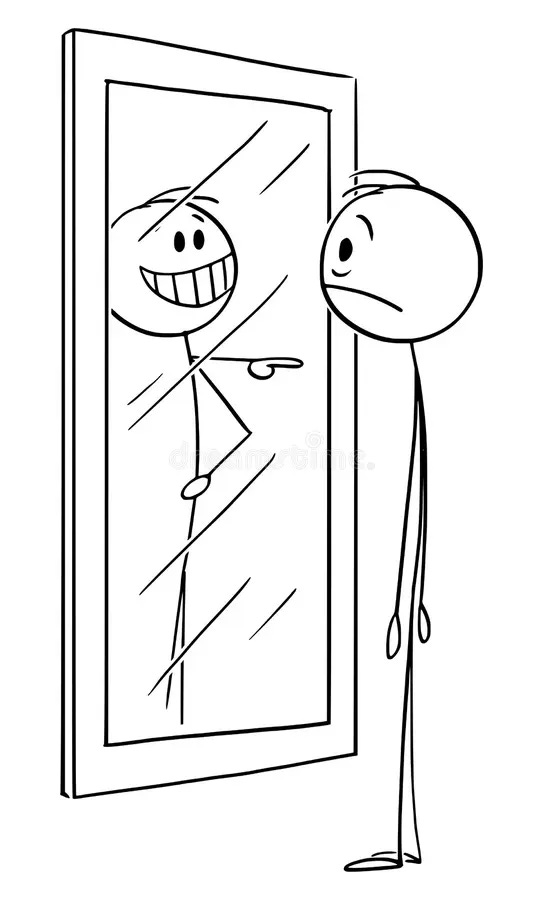
I take days off now without the gnawing sense of responsibility or the belief that the world will collapse in my absence. I draw boundaries. I’ve learned to politely push back and to let go of things that aren’t my responsibility, even when someone really wants them to be.
I also invested time in learning something completely outside of work: aerial arts and regular workouts. It’s made me physically stronger and genuinely happier. But more importantly, it trained my brain to prioritize myself. Every time I show up to class, I’m practicing the act of choosing me - my growth, my joy, my body - over the endless demands that will always be there.
This isn’t a lesson I’ve mastered. It’s one I’m actively living, sometimes succeeding, sometimes slipping back into old patterns. But the direction is clear, and I’m carrying this commitment into 2026.
5. Energy Management Over Time Management
For months, I told myself I didn’t have enough time. Between my side gig, household chores, and my full-time job, the math simply didn’t add up. But then I noticed something strange: there were days when I would come home with hours to spare - enough time to do yoga, work out, or tackle a project I’d been putting off. And yet, I wouldn’t do any of it.
I’d procrastinate. Scroll mindlessly. Kill time until dinner. Then beat myself up for wasting the evening.
That’s when it hit me: the problem wasn’t time. It was energy.
By the time I got home in the evening, I was drained. I didn’t have the physical or mental reserves to pick up anything demanding. I could handle basic chores, some light cleaning, and self-care routines. But nothing that required real strength or focus. The same pattern showed up at work. I realized my most productive hours were 9am to 1pm. That’s when my thinking was sharpest, when I could do deep work, when complex problems felt manageable.
So I reorganized my day entirely: lighter tasks moved to the evening, heavier tasks tackled in the morning when I actually had the capacity for them. I started intentionally blocking those hours as focus time, only allowing critical meetings during that window. The 2-5pm slot became my meeting block.
This simple shift had a profound impact. Instead of a fragmented calendar with 20-minute gaps between meetings, which was too short to accomplish anything meaningful, I had consolidated blocks of uninterrupted time. I could actually get into flow states. I could finish what I started. I was driving more work in the same number of hours, not because I’d gotten faster, but because I’d aligned my tasks with my energy.
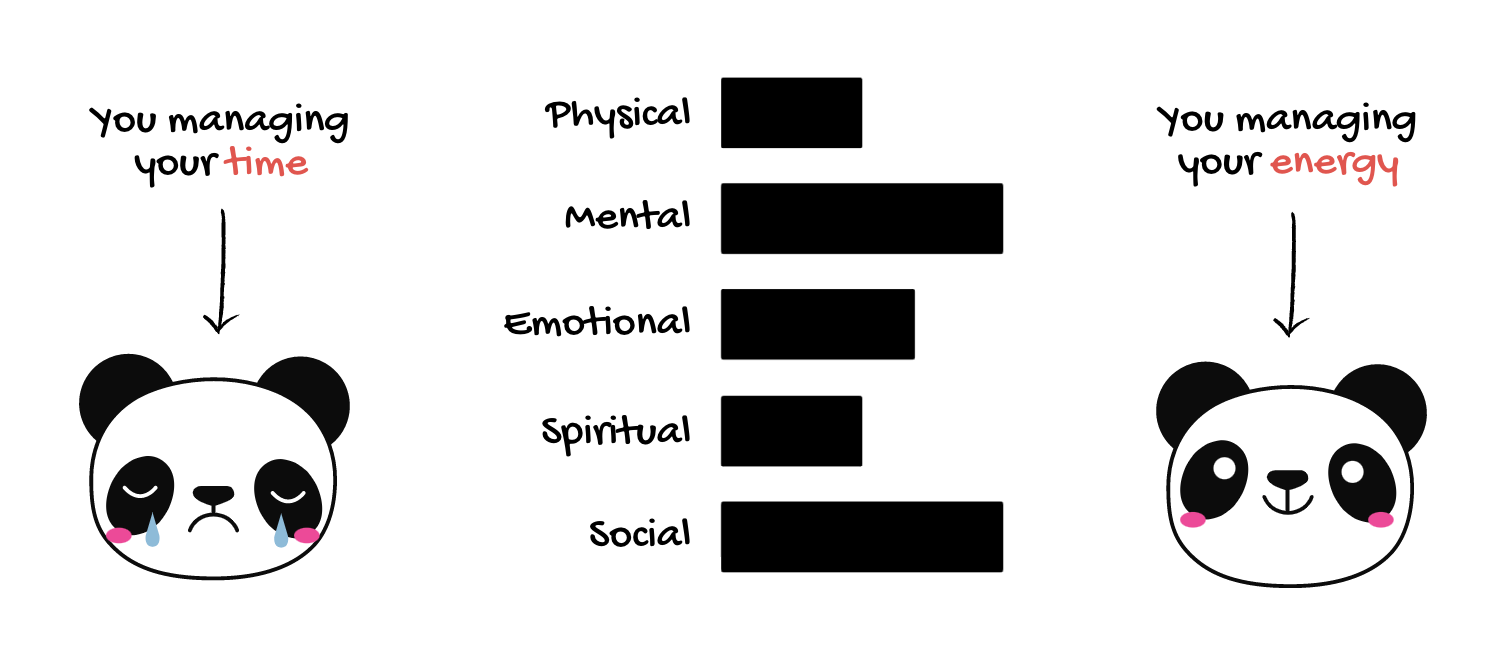
Time blocking isn’t new advice. But energy-based time blocking aka designing your day around when you have capacity, not just availability, worked better for me. In 2026, I’m protecting my peak hours fiercely and accepting that not all hours are created equal.
Closing Thoughts
These lessons aren’t revolutionary, but they’re hard-won. They represent the distance between the leader I thought I needed to be three years ago and the leader this moment actually requires.
What strikes me most is how deeply personal these lessons are. In an industry obsessed with technical innovation, my biggest growth came from learning to be more intentional about relationships, more honest about my limits, more protective of my energy, and more deliberate about putting myself at the center of my own life.
The AI transformation will continue accelerating in 2026. New models will emerge, paradigms will shift, and the technical landscape will keep evolving at a dizzying pace. But I’m increasingly convinced that the leaders who thrive won’t just be the ones who learn the fastest. They’ll be the ones who sustain themselves, prioritize ruthlessly, invest in the relationships that matter, and have the self-awareness to know they can’t do it all.
These aren’t lessons I’ve mastered. Some of them I am still actively struggling with, like prioritizing myself. But the direction is clear, and I’m carrying these commitments into 2026 not as aspirations, but as non-negotiables.
The irony isn’t lost on me: in the age of artificial intelligence, the most important lessons have been deeply human ones.
What lessons are you carrying forward?
✨ Kickstart Your 2026 Mastery: Upcoming Workshops & Bootcamps
We’ve designed multiple intensive events to turn your knowledge into top-tier job skills this new year.
Join us to watch learners from our Product DS Bootcamp solve real industry case studies and showcase their solutions. This is your chance to see how data scientists structure complex problems and present actionable, data-driven recommendations.
Join the PrepVector team and local data science peers for an evening of networking, talks, and discussion right here in the Bay Area. It’s the perfect opportunity to swap insights, discuss the latest trends in Data & AI, and grow your professional community.
Go beyond the basics of p-values and power calculations. This two-day intensive is designed to equip mid-level DS professionals with the knowledge to handle complex A/B testing scenarios, from heterogeneous treatment effects and multi-armed bandits to advanced causal inference in non-randomized settings.
Transform your career into a Product Data Scientist. This immersive bootcamp is focused on the entire lifecycle: framing ambiguous business questions, defining actionable metrics, designing robust A/B tests that drive revenue, and translating technical insights into C-suite decisions. Build the product sense top companies demand.
Subscribe to this newsletter to be the first one to know when these new articles or events go live. We look forward to continuing this incredible journey with you in the coming year! 🎉