

📚 Professional Reads That Shaped My Year 2024
Discover the professional books that shaped my journey in 2024, influencing my growth as a data science coach and practitioner.

👋 Hey! This is Manisha Arora from PrepVector. Welcome to the Tech Growth Series, a newsletter that aims to bridge the gap between academic knowledge and practical aspects of data science. My goal is to simplify complicated data concepts, share my perspectives on the latest trends, and share my learnings from building and leading data teams.
As the year winds down, I find myself reflecting on the professional books that have influenced my growth as a data science coach and practitioner. These books have inspired new ways of thinking, challenged my approach, and deepened my understanding of key concepts in data science and beyond. Let’s take a look at the ones that made the biggest impact.. So let’s get into it.
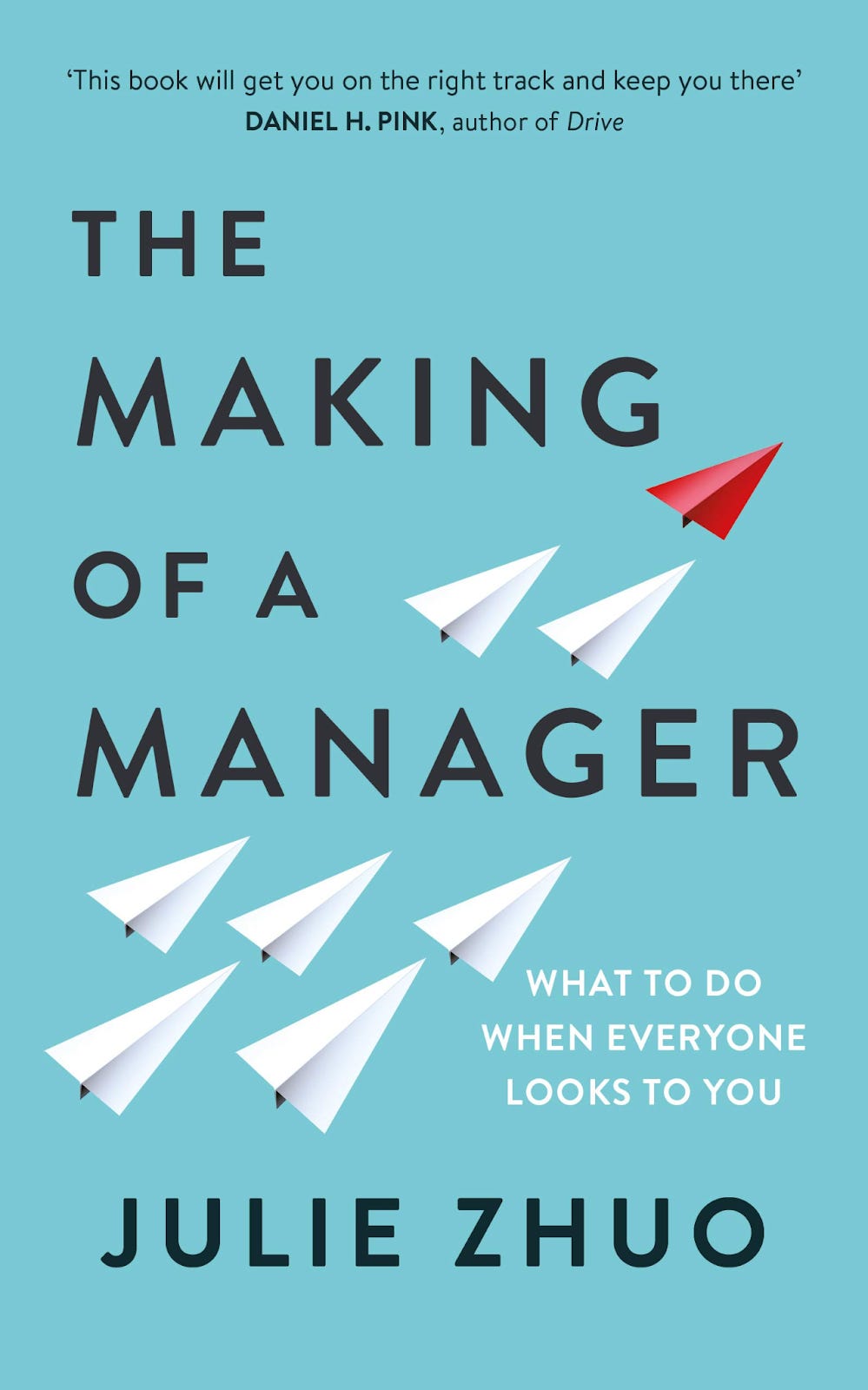
1. The Making of a Manager by Julie Zhuo
Transitioning from an IC to a manager is a journey fraught with challenges. Zhuo draws on her own experiences as a manager at Facebook, as well as research and interviews with other leaders, to provide a practical guide to navigating this evolution. Julie Zhuo takes readers on her personal journey and offers actionable advice on how to lead with empathy, build effective teams, and make better decisions. You can start applying some of these principles right away!
The book covers topics such as:
setting goals
getting things done
giving feedback
handling conflict
building teams.
Nurturing culture, and more!
It’s an invaluable resource for anyone stepping into a leadership role or seeking to refine their managerial skills.
Release Year: 2019
# Pages: 288
Key Takeaways:
Trust as the Foundation: Management is not about control—it’s about building trust and fostering growth.
Feedback that Inspires: Effective feedback balances honesty with empathy, ensuring it motivates growth rather than defensiveness.
Processes for Success: Establishing clear processes streamlines collaboration and reduces ambiguity in team dynamics.
My Honest take:
One section that particularly stood out discusses the art of giving effective feedback.
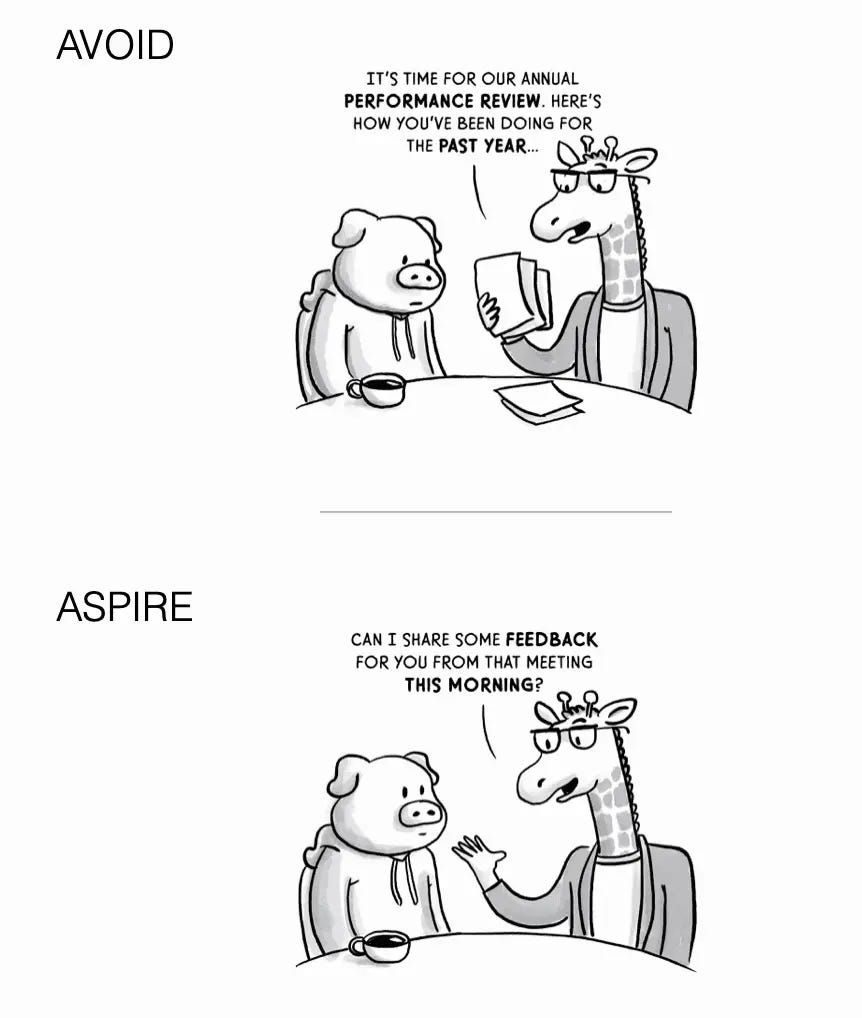
Zhuo’s method ensures feedback is not only constructive but also fosters growth. This approach inspired me to refine how I provide input during coaching sessions, especially when guiding learners on technical projects. Her emphasis on trust-building directly influenced my mentoring approach, encouraging stronger professional relationships.
Fav Quote:
“As you manage more and more people, you’ll play a bigger role in shaping culture. Don’t underestimate the influence that you can have. Even if you’re not the CEO”
I would absolutely purchase Part 2 of this book, focusing on more experienced managers who are looking to lead strategic initiatives, increase their influence, and shape the culture!
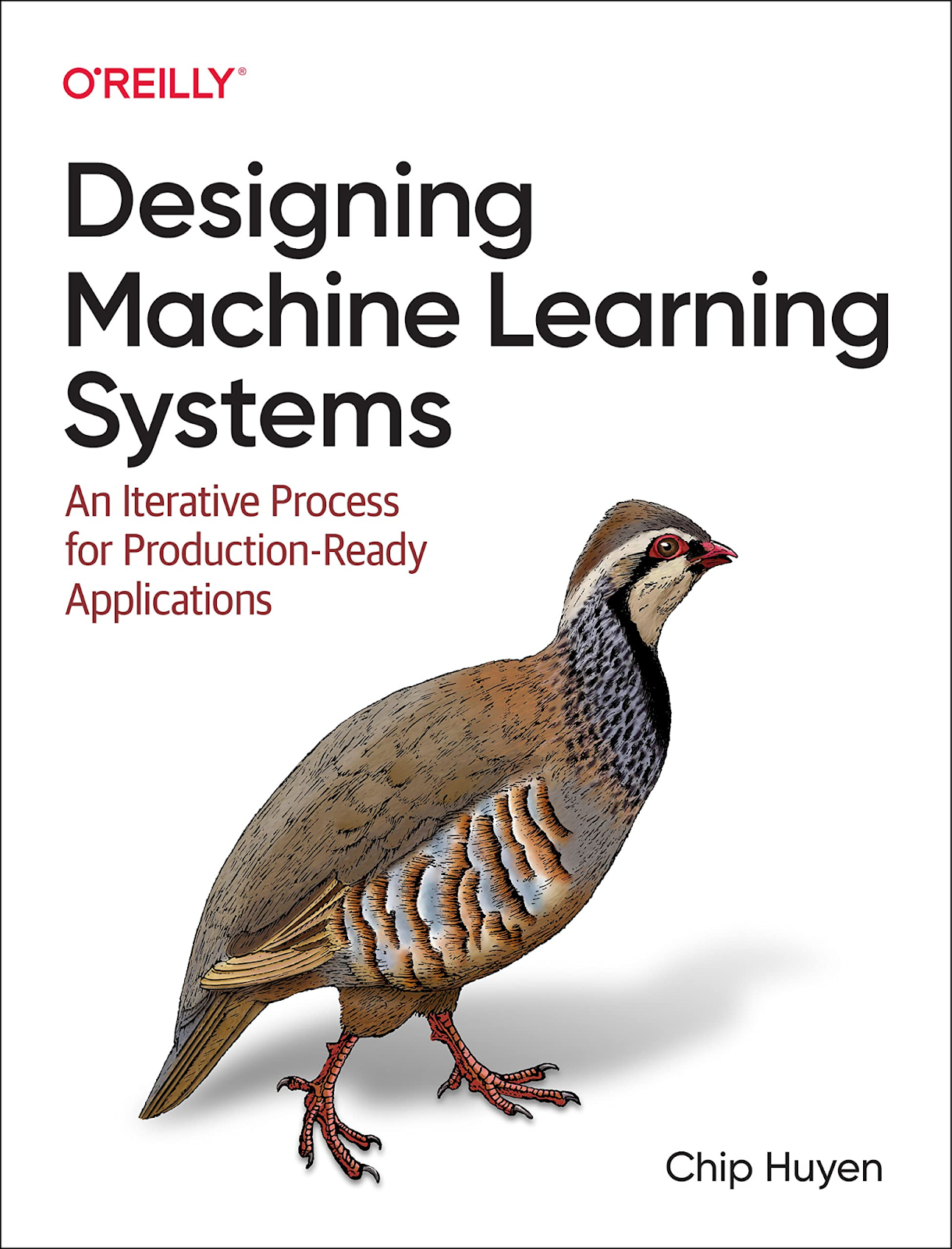
2. Designing Machine Learning Systems by Chip Huyen
Designing Machine Learning Systems by Chip Huyen is a comprehensive guide to building scalable and efficient ML systems. Huyen, with his rich experience in both academia and industry, offers practical advice on the full lifecycle of machine learning projects, from designing systems that can handle large-scale data to deploying and maintaining models in production. It focuses on system design, especially how to architect machine learning workflows that are both robust and maintainable. Huyen also delves into the importance of reproducibility and the challenges of model drift over time. The book is packed with examples, case studies, and tips that make complex concepts accessible, offering real value to anyone working in the machine learning space.
Release Year: 2022
# Pages: 386
Key Takeaways:
Think Beyond Models: Success in ML requires systems thinking, not just model building.
Automation Matters: Automated monitoring and retraining are as critical as the initial development of an ML model.
Feature Engineering Excellence: Robust feature engineering pipelines drive scalability and reproducibility.
My Honest Take:
When I first picked up Designing Machine Learning Systems, I was expecting to enhance my technical expertise, but I ended up gaining a deeper, more comprehensive perspective on building scalable ML systems. One of the most impactful insights was Chip Huyen’s emphasis on system-level thinking.
The section on feature engineering pipelines, in particular, was a game-changer. Huyen advocates for designing pipelines that are reusable, auditable, and maintainable. This practical advice, along with his examples of robust ML infrastructure, has reshaped how I approach teaching. It's not just about coding skills anymore—it's about fostering a mindset that enables learners to think systematically and architect ML solutions for long-term success. This shift has been transformative in how I guide students to tackle complex, real-world ML challenges with confidence.
Caution:
On the flip side, this book is an advanced read. So if you are new to ML, I recommend starting with a basic book first. I recommend you to have a strong understanding of the following before reading this book:
Statistical distributions, finding the range, median, average, and mode in a data set
How to train a simple machine learning model in any language (e.g. python, R, etc.)
A conceptual understanding of several machine learning algorithms (e.g. linear regression, decision trees, logistic regression, etc.)
Experience cleaning and manipulating messy data in a computer language (e.g. python, R, SQL)
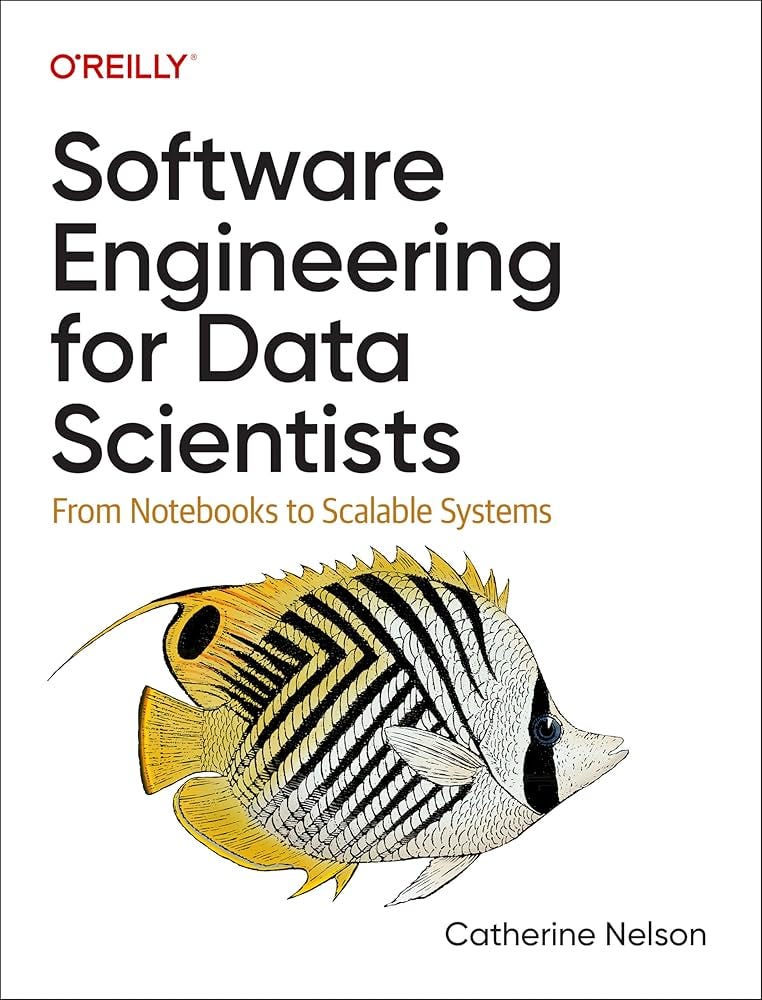
3. Software Engineering for Data Scientists by Catherine Nelson
Software Engineering for Data Scientists by Catherine Nelson is a practical guide designed to help data scientists integrate software engineering principles into their work. As data science becomes more ingrained in production environments, the need for robust software engineering practices is critical. Nelson discusses topics such as code organization, version control, testing, debugging, and deployment. A significant focus of the book is on the importance of maintainability and scalability in data science projects, especially when transitioning from prototypes to full-scale production systems. The book also highlights how data scientists can improve their collaboration with software engineers by adopting practices like continuous integration and modular code design. This book is a valuable resource for anyone looking to elevate their coding standards and approach data science problems with a more engineering-centric mindset.
Release Year: 2024
# Pages: 257
Key Takeaways:
Engineering Amplifies Impact: Robust software engineering practices maximize the effectiveness of data science.
Write Clean Code: Modular code and automated testing ensure scalability and reduce errors.
Collaboration is Key: Version control is crucial for reproducibility and teamwork, particularly for data pipelines.
Listen to this podcast by MLOps Community where Catherine talks about the data science role, it’s evolution, and why she believes all data scientists should learn software engineering principles.
My Honest Take:
This is one of the books I was looking forward to reading since the first announcement came out! My favorite part is the emphasis on clean code and modularity. I referenced this book in one of the modules of the AI/ML Projects Course curriculum, where I teach clean coding practices. More about the course later! What made the biggest impact on me personally, though, was the section on automated testing. I learnt a lot about debugging workflows, reducing the time to debug and increasing the reliability of my projects. This book has encouraged readers to think like engineers.
A must-read for every data scientist who doesn’t come from a strong engineering background, and wants to become a better engineer.
Course Details:
I launched the AIML Projects for Data Professionals course last year, and I have received an overwhelmingly positive response from the data community. I teach the end-to-end process of executing an AIML project - scoping, execution, deployment. We will build a portfolio of 3 projects through the course:
Uber ETA Prediction
Demand Forecasting using Prophet
Speech to Text Transcription
You will walk away with insights on end-to-end project execution and a stellar github profile to showcase to the hiring managers and recruiters.
One of the modules I absolutely loved creating was Engineering Principles for Data Scientists, where I have referenced Catherine’s book along with others. The feedback from learners has been overwhelmingly positive—many have cited this as the most transformative part of the course.
Explore the course here!
2 new cohorts are launching in Q1 and they are filling up fast, so sign up now!
Final Thoughts
These books have been invaluable in sharpening my professional skills and in shaping the learning experiences I provide. These professional reads have truly expanded my perspective on how we approach both the technical and collaborative aspects of data science. I hope you find them as insightful and transformative as I did.
I’d love to know—what professional books have inspired you this year? Share your recommendations—I’m always looking to expand my bookshelf!
In my next newsletter, I’ll be switching gears and sharing some of my leisure reads for 2024 - the books you’d want to pick up over a weekend for a read with your coffee. So stay tuned!